
Why does this comparison matter?
AI glasses are moving from experimental wearables to practical everyday tools. The first wave of devices focused mainly on cameras, open-ear audio, and voice assistants. The second wave is adding displays, which changes the value proposition for business users.
A display makes AI glasses more useful because the user doesn't have to rely on audio alone. They can read captions, see navigation prompts, preview images, follow scripts, or check information privately. That matters in noisy workplaces, international meetings, training sessions, and field environments where pulling out a phone interrupts the task.
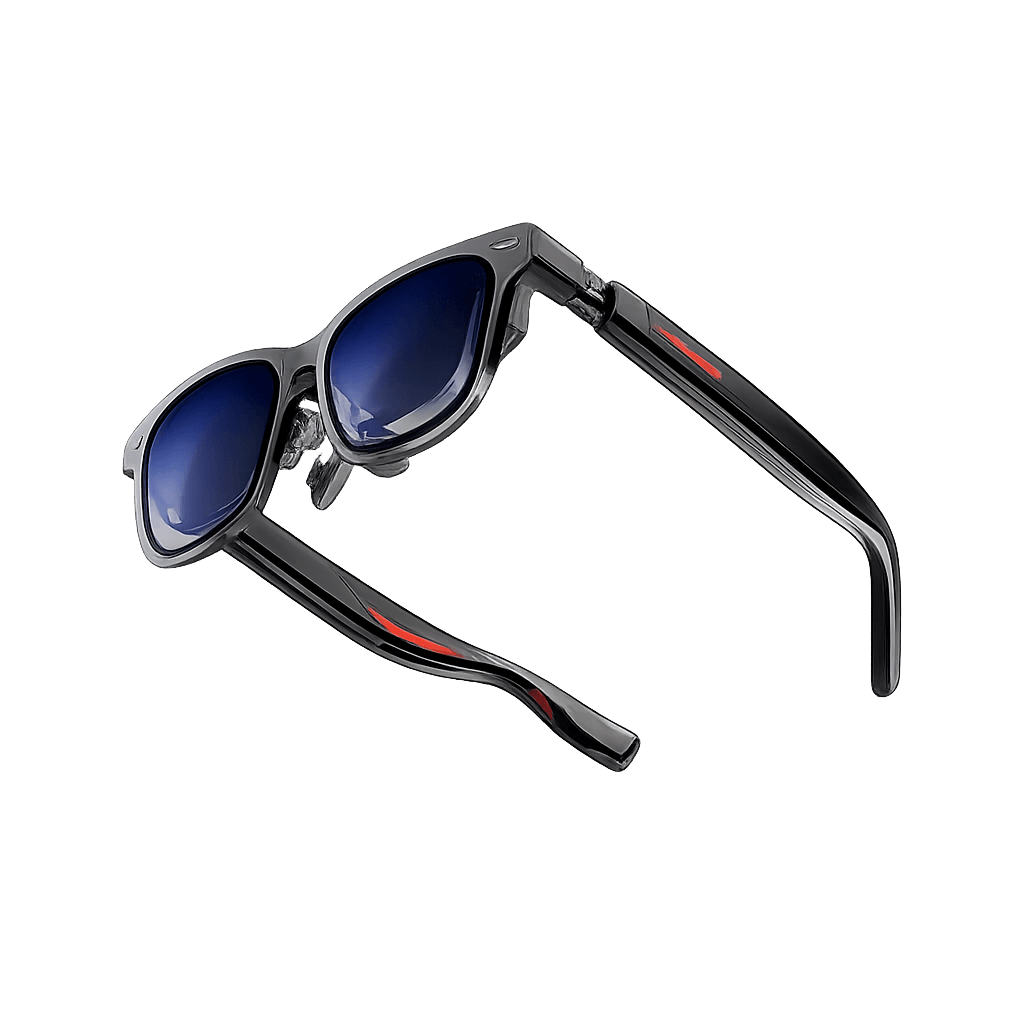
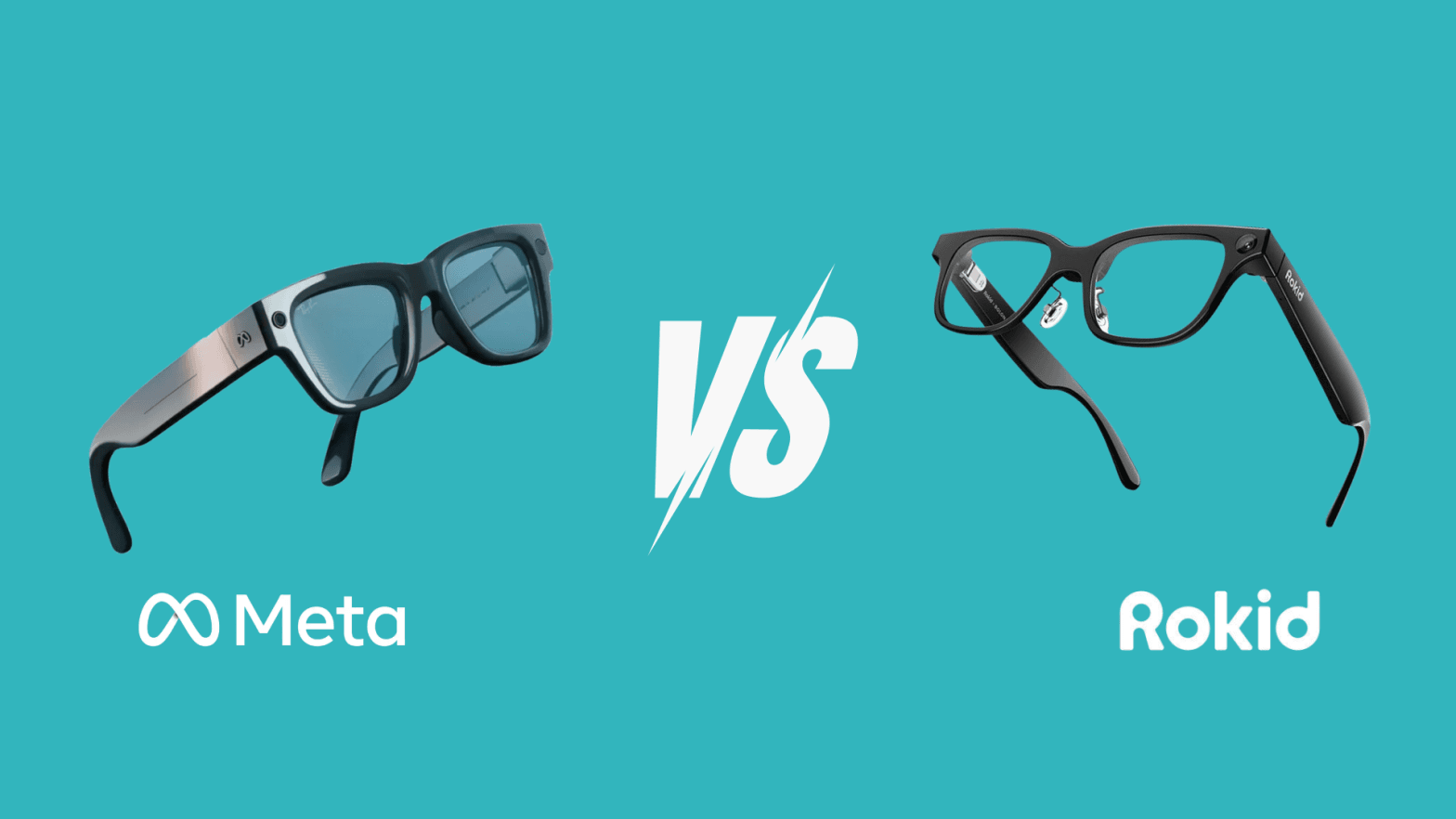
Rokid and Meta are two of the clearest examples of this shift. Rokid Glasses use a dual monochrome Micro-LED waveguide display designed for concise text overlays, including translation, teleprompter scripts, navigation prompts, and AI responses. Meta Ray-Ban Display uses a full-color display in the right lens, paired with the Meta Neural Band for subtle wrist-based control.
Quick recommendation
Choose Rokid Glasses if your priority is lightweight AR information, subtitles, translation, teleprompter use, simple prompts, and business travel.
Choose Meta Ray-Ban Display if your priority is messaging, AI answers, live captions, video calls, camera preview, and a polished everyday assistant.
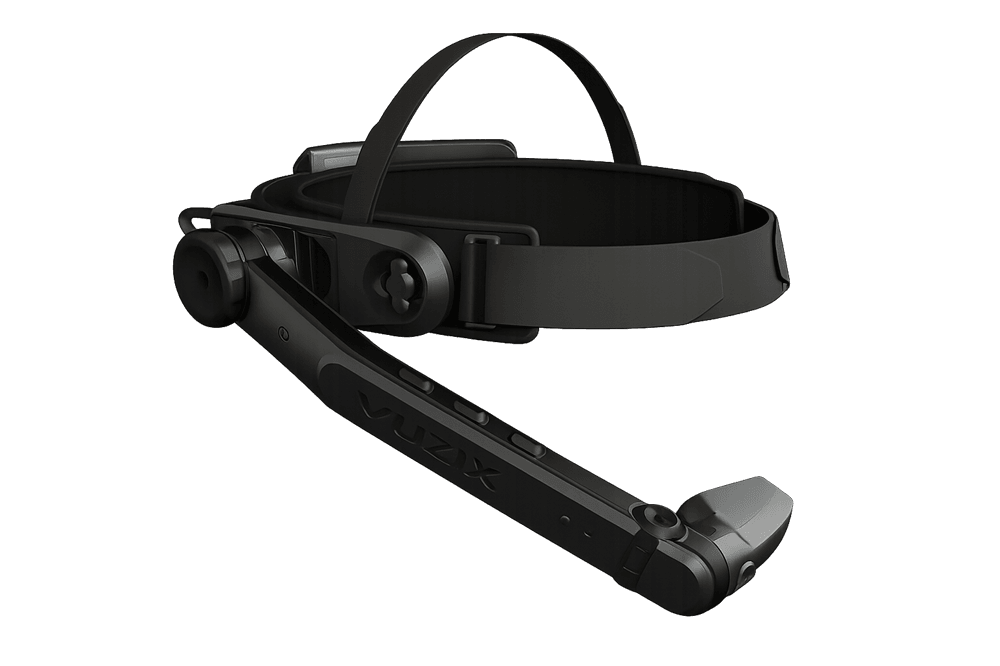
Avoid both as the primary choice for harsh industrial environments, PPE-heavy work, or large managed fleets unless your deployment has been properly tested. In those cases, enterprise-focused smart glasses such as the Rokid RV101, RealWear, or Vuzix-style devices may be more appropriate.
Rokid Glasses vs. Meta Ray-Ban Display comparison table
Category | Rokid Glasses | Meta Ray-Ban Display
Product type | Display-equipped AI and AR smart glasses | AI smart glasses with in-lens display and Neural Band
Display | Dual monochrome green Micro-LED, 480 × 640 per eye, up to 1,500 nits, 30° FOV | Full-color display in the right lens, 600 × 600 pixels, approx. 20° FOV
Weight | Approx. 49 g | Official public pages don't consistently list the weight, so confirm before procurement
Camera | 12 MP first-person camera with photo and video capture | 12 MP camera, media capture, display preview, and hands-free video call support
Controls | Voice, touch gestures, physical buttons, and Hi Rokid app controls | Voice, glasses touchpad, and Meta Neural Band EMG gestures
AI features | AI assistant, translation, navigation prompts, teleprompter, transcription, and object recognition, depending on app and region | Meta AI, notifications, live captions, live translation, navigation, messaging, and calendar-style productivity features
Battery | Approx. 45 minutes of video recording, around 6 hours of music, fast charging to 80–90% in about 20 minutes | Up to 6 hours of mixed use and up to 30 hours total with the charging case
Water resistance | IPX4 splash-resistant | IPX4 water-resistant, not designed for submersion
Availability | Region-dependent through Rokid channels and partners | US availability confirmed; some regional Meta pages still show limited or unavailable status, so procurement must be checked by country
Best fit | Translation, presentations, guided prompts, lightweight AR information | Everyday AI assistant, communication, captions, messaging, and productivity
Design and comfort
Rokid Glasses are clearly designed with weight in mind. At approximately 49 g, they are light enough for daily use and closer to normal eyewear than most AR display devices. The trade-off is that the design still looks more tech-forward than classic eyewear. The benefit is functionality: dual-eye overlays, open-ear audio, a camera, microphones, and AI workflows in one compact frame.
Meta Ray-Ban Display has the edge in style. The Ray-Ban frame design makes the device easier to accept in client-facing or public settings. The Neural Band adds another wearable component, but it also gives Meta a major interaction advantage. Subtle wrist gestures are more discreet than repeated voice commands, which matters in offices, at events, in airports, and in meetings.
For B2B use, comfort should be tested by role. A sales director using glasses while traveling has different requirements than a technician wearing them for a full shift. Neither product should be approved for fleet rollout based on spec sheets alone.
Display and visual experience
This is where the two products differ most.
Rokid Glasses use a dual-eye monochrome Micro-LED display. That makes them suited to readable information rather than rich media. The practical use cases are captions, translation, teleprompter scripts, short instructions, call information, and navigation prompts. Rokid's own academy material describes the experience as short, task-specific overlays rather than a full spatial workspace.
Meta Ray-Ban Display uses a full-color display in the right lens. It is designed for private, glanceable visual information: notifications, messages, captions, navigation, AI answers, image preview, and video communication. Meta's product information also positions the display as something that appears when needed rather than constantly filling the user's view.
For enterprise readers, this distinction matters. Rokid is more practical for text-first workflows. Meta is more polished for personal productivity and communication.
AI and interaction
Rokid's AI experience is built around the Hi Rokid app, voice interaction, translation, transcription, and camera-assisted understanding. It is useful when the user wants quick information without picking up a phone. The strongest professional examples are live translated subtitles, meeting notes, speech prompts, and hands-free capture.
Meta's interaction model is more complete for everyday use. The glasses can be controlled via the touchpad, voice, and the Meta Neural Band. The Neural Band detects subtle wrist and hand movements through EMG sensors, enabling gesture control and neural handwriting. This is a major advantage in quiet or public settings where voice commands are awkward.
Meta also offers deeper integration with communication apps. Official materials mention messaging, WhatsApp, Messenger, Instagram, live captions, live translation, and hands-free video calls. That makes Meta the stronger option for mobile professionals who spend much of their time communicating rather than following task instructions.
Camera, audio, and content capture
Both devices include a 12 MP camera, but their practical emphasis differs.
Rokid's camera supports hands-free photo and video capture, including use cases such as documentation, scene recognition, and first-person recording. This can be useful for travel, education, sales demos, and light documentation tasks. Rokid also offers open-ear audio and a four-microphone array, which helps with calls and voice pickup.
Meta's camera system is more closely tied to social, communication, and AI workflows. Meta Ray-Ban Display supports media capture, camera preview through the display, and two-way video calls on WhatsApp, Messenger, and Instagram. The display preview is important because it addresses one weakness of earlier camera glasses: users can frame what they are capturing before sharing it.
For professional use, Meta is better for communication and creator-style capture. Rokid is better when the camera supports AI understanding, transcription, translation, or workflow prompts.
Software ecosystem and deployment limits
This is the section buyers shouldn't skip.
Meta Ray-Ban Display requires a compatible smartphone, a Meta account, and the Meta AI mobile app. Ray-Ban's FAQ also states that the glasses can pair with only one Meta account at a time. That's fine for individual users, but it complicates shared-device scenarios, training fleets, and centralized management.
Rokid likewise depends on its companion app for pairing, AI model settings, media management, translation settings, firmware updates, and device configuration. That makes the device practical for individuals and small teams, but buyers should still confirm fleet management, data handling, app availability, and regional AI service support before purchasing at scale.
For EU organizations, GDPR and internal data policies matter. Both products involve cameras, microphones, cloud-connected AI features, and mobile apps. Before deployment, teams should define where the glasses may be used, whether recording is allowed, how consent is handled, and what data may be processed through AI services.
Suitability for business use cases
For international business travel, Rokid makes a strong case because its display is built around translation, subtitles, and quick AI prompts. It is practical when the user needs language support without holding a phone.
For executive productivity, Meta is stronger. Notifications, private message viewing, live captions, visual AI answers, and Neural Band control align better with everyday office and travel workflows. Meta's calendar and productivity positioning also makes it more appealing to individual professionals.
For presentations and public speaking, Rokid is the better fit. The teleprompter-style use case is clearer and less dependent on social apps or the broader Meta ecosystem.
For customer-facing sales and events, the answer depends on the goal. Meta will likely attract more attention thanks to the Ray-Ban design and Neural Band interaction. Rokid is more useful if the glasses need to display prompts, talking points, or translated captions.
For field service, logistics, or industrial work, neither device should be the default answer. These environments often require ruggedization, safety compliance, barcode workflows, remote expert tools, MDM, and tighter IT control. In those cases, buyers should evaluate enterprise smart glasses separately.
Pros and cons
Rokid Glasses pros
Rokid Glasses are very light for display-equipped AI glasses.
The dual-eye display is better suited to captions, prompts, and teleprompter workflows.
The 12 MP camera, open-ear audio, and microphone array support practical hands-free use.
The product is more flexible for translation-heavy and presentation-heavy use cases.
Rokid Glasses cons
The monochrome display is not designed for rich visual content.
Battery performance depends heavily on usage, especially video recording and display use.
The design is less familiar than Ray-Ban eyewear.
Fleet management and enterprise security requirements need to be validated separately.
Meta Ray-Ban Display pros
The Ray-Ban design is easier to wear in public and professional settings.
The full-color in-lens display is more versatile for messages, captions, previews, and AI answers.
The Meta Neural Band gives the device a stronger, more discreet control method.
The communication ecosystem is stronger for messaging, calls, and social apps.
Meta Ray-Ban Display cons
The product is still region-limited, and availability must be checked locally.
The ecosystem is consumer-first, which can limit shared-device and enterprise deployment.
The Neural Band adds another device to fit, charge, and manage.
Pricing starts at $799, including the glasses and the Neural Band.
Testing should cover at least one full workday per device. Use the same test scenarios for both pairs of glasses: one meeting, one translation task, one walking navigation task, one hands-free capture task, one indoor work session, and one outdoor session. Record comfort after 30 minutes, 2 hours, and 4 hours. Also check heat, battery drain, app stability, camera import speed, display readability, and whether people around the wearer can tell when recording is active.
If the devices are tested with business users, break down the results by role. A marketing user, account manager, trainer, and technician will judge the same glasses differently.
Final verdict: which one should businesses choose?
Rokid Glasses are the better choice when the display is used as a work aid. They make more sense for translation, guided prompts, teleprompter scripts, short instructions, and lightweight AR information. For professional users who need glanceable information more than social features, Rokid is the more task-focused option.
Meta Ray-Ban Display is the better choice when the glasses serve as a personal AI and communication layer. It is more polished for everyday productivity, private notifications, live captions, messaging, and camera preview. The Neural Band also gives Meta a more advanced interaction model.
For enterprise buyers, the safest conclusion is this: Rokid is stronger for work prompts, Meta is stronger for personal productivity, and neither should be deployed at scale without a privacy, app management, and support review.